




Arrow left Close icon

Press

Portfolio of Press Concepts for Best-in-class Dewatering

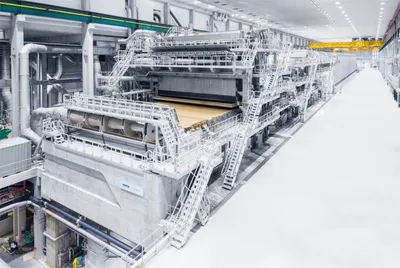
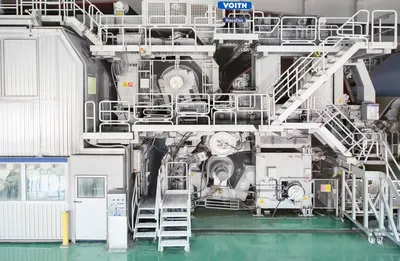
The main function of the press section is the mechanical dewatering of the paper sheet. Furthermore, the press configuration determines surface properties such as smoothness and two-sidedness. Our press concepts aim to achieve the maximum possible dewatering, as mechanical pressing is more cost-effective than thermal drying. In addition, the higher the dry content, the more it contributes to higher web strength, so that the risk of breaking during transfer to the dryer section and during the entire operation is kept to a minimum.
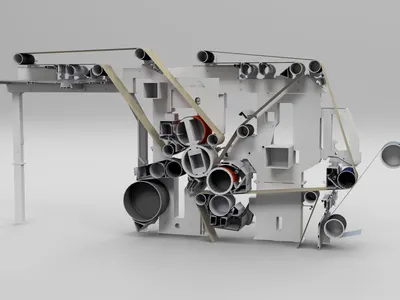
High-speed Press for Lightweight Grades

Our efficient Tri-Nip press configuration designed for packaging and specialty papers, combining high-speed capability with optimized moisture control and reduced operating costs.

Key features:
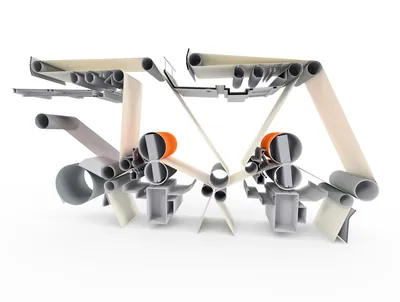
  • Ideal for lighter grades: can be tailored for packaging and specialty papers at elevated machine speeds
  • Three-felt configuration: minimizes consumable costs and enhances press section efficiency
  • Unique press arrangement: delivers improved cross moisture profiles for better sheet uniformity
  • Proven concept: trusted design with consistent results across a wide range of applications

Joining Two Powerful Inlet Shoe Presses

Our high-performance press solution combining two inline shoe presses for enhanced dewatering, flexibility, and sheet quality across a wide range of paper grades.

Key features:
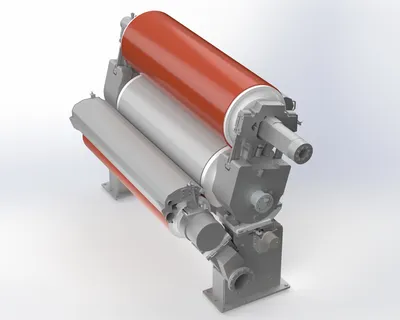
  • Dual shoe press configuration: maximized dewatering efficiency and sheet dryness in a single press section
  • Wide application window: suitable for board, packaging, graphic, newsprint, and specialty paper grades
  • Optimized geometry: minimizes rewetting and ensures consistent moisture profiles
  • Fully supported web run: configurable for high performance across varying grammage and speed ranges

A compact two-nip press installed after the wire section

The TT CombiPress features a closed web run from the wire section through the second press nip, ensuring the first open draw occurs only after mechanical dewatering, when the sheet is stronger and drier. The following mono-felted press, equipped with NipcoFlex shoe press technology, delivers high nip load for exceptional dryness and superior sheet-smoothing performance.

Key features:

  • Ideal for a wide range of grades: tailored for e.g., packaging and specialty papers
  • The TT CombiPress is the most cost-efficient solution in terms of cost/performance for speeds up to 1000 m/min
  • Three-felt configuration: minimizes consumable costs and enhances press section efficiency
  • Highly suitable for rebuilds: its three nip concept requires less space than other configurations

Key components

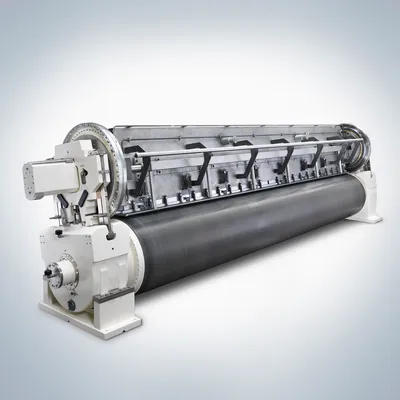
Reliable Shoe Press Technology for Paper and Board Production

High-efficiency shoe press solution delivering superior dewatering, enhanced sheet quality, and significant energy savings across a wide range of paper and board grades.

Key features:
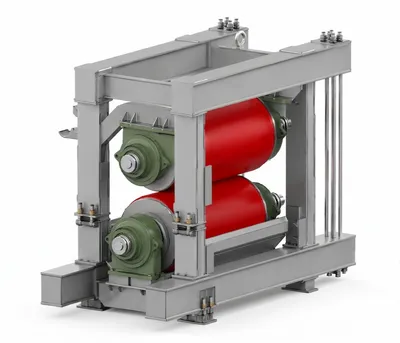
  • Proven field results: hundreds of installations worldwide delivering gains in dryness, speed, and paper quality, alongside reduced maintenance needs and higher availability
  • High dewatering performance: increases dryness, reducing steam and water consumption
  • Hydrodynamic design: internal support system ensures uniform pressure and minimal sheet rewetting
  • Energy-efficient operation: supports cost-effective and sustainable production with reduced thermal demand
  • Upgrade-ready: ideal for retrofits and new installations, delivering measurable value from day one

Efficient Press for Paper & Board Production

Reliable and tailored press solution offering efficient water removal and improved dryness.

Key features:

  • Large press roll diameter: up to 1,800 mm for enhanced dewatering and sheet bulk control
  • Flexible configuration: available in single- or double-felted setups with rubber or ceramic roll covers
  • Cost-effective alternative to shoe press: still delivers relatively high dryness and reliable performance
  • Stable operation: supports consistent runnability across a wide range of paper grades and machine layouts
  • Proven and practical: backed by extensive press section engineering expertise
  • Easy maintenance: ensures long-term mechanical stability